Showing posts with label Polls. Show all posts

Thursday, December 1, 2011

Mitt's Undermining: Scenarios for a December Opening

Correct me if I am entirely misinterpreting things, but I have begun to get the impression of late that Mitt Romney may well lose the GOP nomination. And if he does, it could all fall apart just as fast as in 2008 (with his February 7 concession) despite being told all year that Romney had the resources to compete through numerous late primary states.

Standing in his way aren't the countless contests in states like Illinois, New Jersey, or Ohio, but the classic obstacles of Iowa, New Hampshire, and Mitt himself. Work with me —
 
After watching Mitt's interview yesterday with Fox's Bret Baier—in which he was taken to task for refusing to concede that he had changed his mind on a handful of issues—I was surprised by the extent to which Romney looks at once both accusatory and feeble. That's without opening his mouth:


Just as Romney crossed his legs before pushing back on Baier's legitimate questioning of his numerous flip-flops, a troublesome campaign scenario for him was born: the public impression of Romney's personality could crumble should he sense the nomination is slipping away from him for a second time. All it takes are some small hiccups in a sea of very impressive debates and town hall meetings, and the national momentum can begin to slip away.

Combine that with today's news that Newt Gingrich has summoned his formal and informal aides to instruct them to refrain from attacking Mitt Romney, and a strange dynamic emerges in which Gingrich can keep sailing on his calm rhetoric as displayed in debates, while Romney's steady thirst for the office—going on five years now since he announced in 2007—may be his biggest weakness.
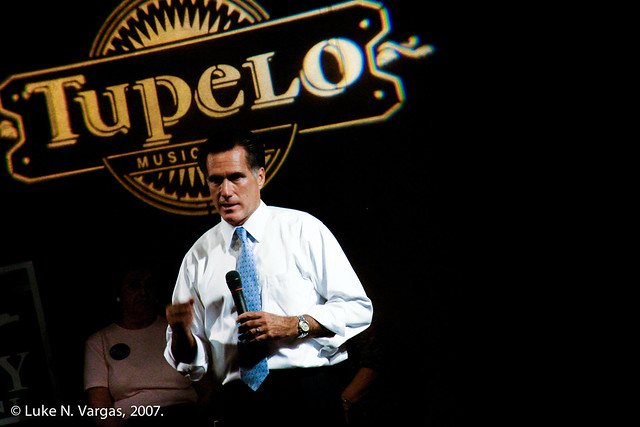
RomneyTupeloMusicHallCR-8490

Ironically, it's Gingrich's blinding self-confidence (often materializing in an arrogance towards his critics and any questioning media) that's lead him to run for President, but Romney's personal quest for the Presidency that could ultimately stand in his way.

Gingrich's financial motivation for effectively changing sides in policy arguments to appease lobbying clients looks oddly respectable—and, oddly, easier to explain away—than a change of heart concerning one's personal convictions. 

At this point, Romney, Gingrich, Paul, and Huntsman look to be the only candidates with the capacity to shake up the election in the coming months. Rick Perry may have cash, Rick Santorum may have tirelessly taken his message to every corner of New Hampshire and Iowa, Michele Bachmann may continue to make her rounds of conservative media outlets of all sizes, but all three candidates have lost their audience. And then there's Herman Cain...

The campaigns of these candidates have stumbled for a variety of reasons, but it can as easily boil down to the likelihood that their message or campaign "personality" could evolve going forward. Without one of these wild cards, it's hard to stay relevant in today's media climate. Bachmann and Santorum tirelessly express complete conservative visions that ring with a conviction some of their opponents lack, but we've lost interest. Cain and Perry, meanwhile, have demonstrated themselves to be ineffectual in telling us anything new about their policy standards beyond prepared remarks.

On the flipside, there is information we are curious to know about Gingrich, Romney, Huntsman, and Paul.

GingrichStAnselmCR-9363

For Gringrich, the public will be curious to know more about his connections to lobbying and hear how he defends his record. While this may seem like an inherently negative thing, it's worth noting that in the first two weeks of December, as the nearness of the Iowa Caucus begins to dawn on voters and their news attention, support rapidly consolidates in a fashion that put the relative highs and lows of the campaign henceforth to shame. Although it seemed for a moment that Herman Cain's supporters would surprise us by helping to hold up his high polling numbers, his meltdown ultimately occurred too early for the rank and file of his supporters to join hands and stand beside the candidate all the way until January.

If Gingrich can capitalize on his frontrunner standing in next week's debate in Iowa, the timing might be right for him to weather the attacks coming his way and maintain his lead going into January.

As for Romney, voters will feed off the continued excitement of watching him pretend he hasn't flip-flopped, and it is still worth acknowledging that he may handle this spotlight well and stay above water until New Hampshire. The primary change of the past weeks is a realization that Romney's business smarts and and crisp rhetoric in debates alone can do all the work for him. There are numerous tactical decisions that Romney and his team must make in the coming weeks to hold onto the nomination, and if either the candidate or the public get spooked, it is astonishing how quickly a campaign can unravel.

Jon Huntsman may have higher negatives than his opponents, but he remains the candidate with the least name recognition by a significant margin. We would be foolish to overlook the effectiveness of the media at introducing and crafting powerful opinions of political candidates in a staggeringly short time, and what this could mean for Huntsman's rather late arrival on the national scene.

To boot, Huntsman has been working hard to create openings for himself — such as his new emphasis on "too big to fail" banks and his articulate criticisms of Romney — in the political discourse of late. Should his forthcoming policy proposals be timely and relevant to the national political discourse the microphone could swing to him, I am beginning to sense a strong likelihood that Huntsman could catch fire coming out of Iowa.
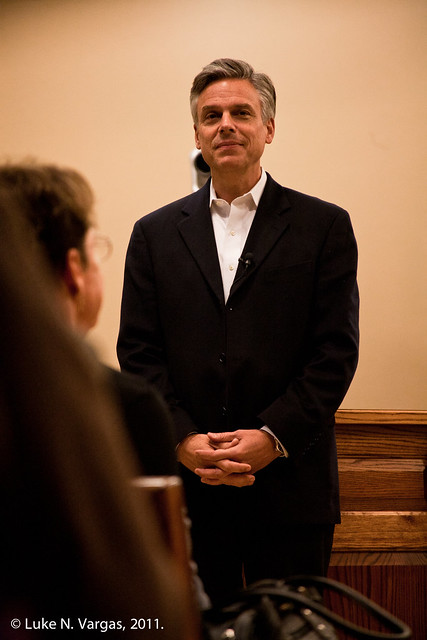
HuntsmanMerrimackCR-9810

He will be performing on a new, and smaller, stage once a handful of his opponents (read: Bachmann, Santorum, Perry, Cain) fall short of expectations and struggle to regain control over their message. Since Huntsman's legitimacy is rooted (not to mention well-earned) in the second contest of the voting season, he can rightly get a pass until round two. This is a significant advantage.

Huntsman's pitch is getting good, and this sustained practice with his unique message is invaluable once votes begin to be cast and the stakes of an actual election for higher office collectively set in.

Ron Paul's opinions were long-ago absorbed and understood (although mostly ignored by) the media, but the Congressmen is polling a full three times higher in Iowa (with 13%) than at this time in 2007.

Reports back from two fellow photographers in Iowa speak of Paul's surprisingly strong support among influential voting groups such as home-schoolers that have largely been overlooked by pollsters. When it comes to individual caucuses, organized and outspoken members from these groups do possess the power to sway public opinion where it matters most and help Paul win a number of caucuses.

Ron Paul carried a single Iowa county in 2008, but I expect a stronger showing this January. Without question, Paul will be a presence in a greater capacity in the coming election than last time around.
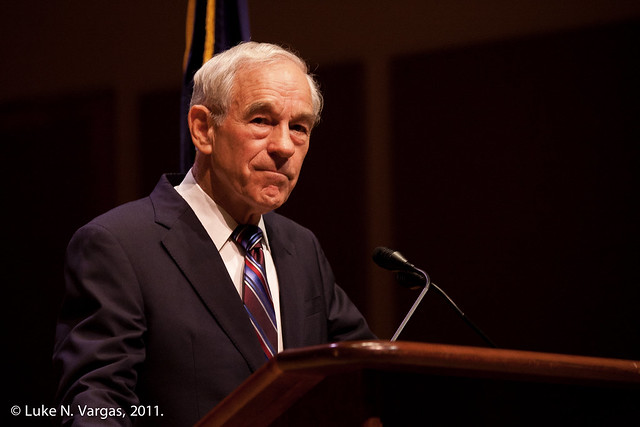
RonPaulKeeneStateCR-9595

Returning to the Fox clip from the top of the post, it is becoming clear the tremendous potential impact that Fox News could have in the coming month as the major "institutional" and henceforth front-runner candidate has been embarrassed by the host of the nightly news program and dramatically revealed to be a much weaker potential candidate than we had come to imagine.

Of course, there are steps Romney can attempt to take to patch over his spat with Baier, but the very occurrence of their confrontation should symbolize the extent to which the good graces of the largest conservative network have a bearing on which candidate dominates the positive coverage going into and, more importantly, coming out of Iowa as the final chapter before the New Hampshire primary is written.

Thanks to recent history, we have Romney's very words from an interview Fox following his 2008 defeat in Iowa, in which he was stopped in his tracks by a come-from-behind victory by Mike Huckabee, despite outspending him by a factor of ten.


At the 2:00 mark it is surprising the extent to which Romney seems to misunderstand who he is truly up against in the race. Having covered John McCain the night before the Caucus in Des Moines and in the following days in New Hampshire, there was a palpable feeling among the media that McCain's 13% finish in Iowa was noticeably stronger than expected, and in subtle ways this new narrative began to play out in articles across the country.

Things got a even more dicey for Romney the following week when he "[got] another silver" with a second place showing in New Hampshire while McCain propelled swiftly into front-runner status. At the 1:00 mark, the uncomfortable cheering (and scattered boos) for the victorious McCain and the awkward acknowledgment by Romney of his evidently 'brainy' but unsuccessful New Hampshire campaign managers truly represents the sealing of his fate.


Bearing this history in mind, Romney's 2011 strategy so far has been to double down on the institutionalization of his campaign, holding "Ask Mitt Anything"-style campaign events and chatty media availabilities than in 2007. In many ways, this approach stymies the kind of natural and gradually accumulating excitement that marks a winning campaign. 

To revel in the catharsis that can punctuate certain points of the electoral process, take in two videos from 2008—the New Hampshire victory speeches by Hillary Clinton and John McCain.


If you think a crowd of 2012 Romney Granite State voters could work themselves up to such levels of excitement as seen for either McCain or Clinton (let alone Obama), please drop me an email. Frankly, with Gallup's recent polling indicating that enthusiasm among his national base of supporters is lower than at any point in this election, I don't see that happening.

In doubling down on his Boston "brain trust" and an anti-emotional approach to campaigning, Romney's may be in danger of falling short of two competing brain trusts: Newt Gingrich's own, more deeply entrenched "brain trust" in his powerful Washington and Wall Street associations, or Jon Huntsman's practical conservatism and increasing resonance with voters.


Tuesday, November 4, 2008

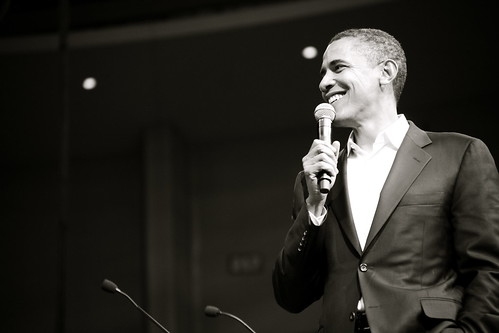
Obama Can Start Smiling

IMG_0953.JPG

In no particular order:

- Things are looking terrific for Obama in Pennsylvania. Exit polls show Obama leading McCain 60/40 among women in the state, enough to all but guarantee a crucial Keystone State victory.

- Early votes from Ohio throw Obama pretty far into the lead and exit polls statewide show him holding an 8-10% lead--a figure in line with polls conducted over the past weeks and days.

- Well, that might just be it. McCain admitted yesterday that he needed Pennsylvania to win and, save a miracle for him, it's looking like he's not going to get that. With Obama holding close (and poised to jump ahead) in Virginia, North Carolina, and Indiana, McCain is riding in the back seat tonight; if Obama wins ANY one of those three states the election is over.

Simple as that.


(Photo credit: Luke N. Vargas. 2007-2009. All Rights Reserved)

Georgia Results vs. Georgia Exit Polls

The first wave of numbers have come in from Georgia and are showing McCain up be a sizable margin. Exit polls, however, are predicting a very tight race.

In Georgia, as well as in Indiana and Virginia, exit polls have put Obama in better position than is being seen in official results; McCain is still leading in Indiana after 20% of votes counted.

Was the McCain campaign right in predicting exit polls would lean towards Obama? Time will tell, but it may just be...

Indiana and Kentucky

Indiana (at 3%) is a 50/50 matchup. No surprise.

Kentucky (at 9%) is a 50/50 matchup as well, with Mitch McConnell currently trailing Bruce Lunsford by 1%. I don't expect Obama to hold near 50% in Kentucky (and I wouldn't be surprised if he dropped a great deal from where he is now), but the existence of McCain/Lunsford voters (albeit in small quantities)--those who go for McCain on the top ticket and vote out an incumbent Republican in the Senate--could signal success for Kay Hagan in North Carolina even if McCain wins the state...

developing...

The Middle of the Night

Fresh (but still pretty groggy) from a two-hour nap I'm back at the computer thinking ahead to 1:00 AM Central African Time when, should the data start flowing relatively quickly, results from Indiana should begin to trickle in. The arrival of exit poll results at midnight is hardly news, and I won't be seeking out any of those numbers.

2:00 AM brings in Indiana, Virginia, and Georgia, three very interesting states whose results can start to paint the picture for what to expect in traditional Republican strongholds. Though I'm hardly predicting an Obama upset in Georgia, if it comes down to less than 4-5% it could indicate the beginning of an Obama blowout.

3:00 AM will usher in results from the all-important states of Ohio, Pennsylvania, and Florida--states that McCain has to win.

3:50-4:15 AM Should everything pan out the way I'm seeing it now, the election should be called by most networks during this time. The clouds should be parting on numbers from Ohio and Pennsylvania. If McCains makes it past the results of VA, OH, NC, PA, and FL he'll be way ahead of expectations and we might be in for a close fight, but it is this 25-30 minute window where I can see the breakpoint falling.

Cheers to a long night!

Here for the Day (and Night)

It's presently 2:54 PM Central African Time. I've been awake for nine hours already, and with the first votes coming in at 6:00 PM EST and Daylight Savings Time now in effect I have another twelve hours to wait before any official results are released.

Thankfully there is no television or radio where I'm staying, so the only access to election results will be through the internet. On top of that I've customized a CNN.com results page with key races to watch and have cropped the window down to prevent me from sneaking a glimpse of the "analysis" that any of the news networks are going to toss around today.

It's all about the numbers tonight.

So as the day continues make sure to return to the Political Courier for some election day insight all the way from lovely the lovely town of The Crags, South Africa!

Sunday, September 14, 2008

A McCain Victory

Here's what it looks like right now. 270-268 electoral votes.

Saturday, July 12, 2008

Preference Polls vs. Favorability Polls

People may make up their mind about who they're going to vote for at the last minute—something conventional polling cannot account for or predict—but candidate favorability/unfavorability polls shed light on why voters like or dislike candidates on political positions as well as more personal, emotional levels.

That's why I think Newsweek's set of Obama and McCain favorability polls released today are so exciting:

Obama: Favorable +24.0
McCain: Favorable +23.0

Obama's number is down from an all-time high of +36, while McCain weighs in relatively high after a few months of polling placed him somewhere between +/- 0 to +20.

Do these numbers show that Obama is losing supporters and is now more widely disliked than he was previously? No. But the polling shows that two relatively well-liked candidates are running for the Presidency this November, and that's pretty exciting.

Thursday, July 3, 2008

Start Believing

Rasmussen:
It would be truly stunning if Obama could turn Montana into a competitive state this November. George W. Bush won Montana?s 3 Electoral College Votes by twenty percentage points in 2004 and by twenty-five points four years earlier.

Rasmussen's latest Montana head-to-head poll shows Barack Obama leading John McCain by 5%.

As they say, truly stunning...especially when you look at how Montana voted in 2004.


Wednesday, June 25, 2008

Obama Gains Some Serious Ground

They may not be "battleground states," but Arkansas, Georgia, and Kentucky have been solid red states for some years now.

Suppose Obama doesn't win any of the three?chances are he won't?but in 2004 Bush won the three states by an average of over 15%.

Fast forward to Barack Obama, 2008, that number is down to just over 6%.

Holy smokes.

Is it even necessary to bring up that Obama is up now (by 1%) in Indiana, something yours truly didn't believe could happen.


[graphs from electoral vote]

Tuesday, May 27, 2008

Who's Stronger?

If I'm in the mood for some election polls, RealClearPolitics has been my first stop, but since individual polls are so difficult to interpret, cumulative nationwide surveys like the ones at ElectoralVote.com are much more interesting and are becoming more and more intriguing to consider.

Keep in mind, however, that Obama was trailing McCain by around 50 electoral votes on this site a few days ago; these polls move day to day and about a dozen states are frequently change sides.


No matter how close the above map makes Iowa and New Mexico look, I see those states going to Obama in November. On the record: Ohio, Indiana, and Michigan will go for McCain in November. Heck, throw New Hampshire and Nevada in there, too. All that is contingent upon whether or not McCain can stay as strong as he's been and was during the most difficult periods of his primary campaign. The states are their for McCain to win, he just needs to show up to fight.

Wednesday, May 21, 2008

Obama Must Face His "Red, White, and Blue" United States

Four years ago the soaring vision of the up and coming Senator Barack Obama united the Democrats; a future leader had a dream for America in which party politics were left behind in favor of the common good. Instead of that ideal turning into reality, it seems Obama's hope for a patriotic red, white, and blue America has played out literally.

As he shifts gear into a general election campaign, Barack Obama must now confront not one, but three Americas: Republicans, Obama-Democrats, and working-class white voters.

It's hard to decided whether or not to blame Senator Obama for the situation he is currently being confronted with. On one hand, Obama's "sweetie" and "bitter" comments have angered women and moderate to conservative rural democrats, his inability to distance himself from the inflammatory sermons of Rev. Jeremiah Wright (still), and Michelle Obama's statements that make us wonder why this man and woman want to be America's first family give me tremendous pause about Obama.

On the other hand, the long nomination process has forced Obama to draw distinctions between himself and Senator Clinton and expose weaknesses that otherwise may not have been discovered. This is not Obama's fault, and neither is the fact that the long primary season has forced Obama's name into the national media on a 24/7 basis, diluting his image as a Washington outsider with every news cycle featuring a story on him.

Kentucky's primary results from yesterday (a 35% win for Clinton) and West Virginia's from last week (Clinton's 41% victory) expose a critical weakness for Obama along certain demographics. What I've been so disappointed by in talking about this election is that I am often criticized for bringing up the fact that voters without a college degree in Kentucky, for example, voted for Clinton over Obama nearly 3-1. These observations, apparently, "divide us" and prevent us as Demographics from working to fix the problems that face us. I've heard it all before.

Don't get me wrong, I think much of Senator Obama's message represents a fantasic injection of life and energy into the Democratic Party that has not been around for years. But at the same time I am a Democrat first and foremost, and my biggest concern is not the preservation of the Obama campaign theme, rather that a Democrat wins in November. Though there are intricacies behind each of these statements that I could discuss, the following are simple facts in my eyes:

If Obama is a weak candidate among working-class white voters, Democrats should be aware of this instead of having John Edwards hop into the picture and try to pass on some credibility to Obama. Come November, endorsements matter much less than whether or not working-class whites are comfortable with Obama over McCain.

Regardless of whether or not Obama wins the Democratic nomination (and he will), I consider it presumptuous of him to make his quasi-victory speech last night. Not only had that plan been in the works for weeks, but as the Democratic-bashers at Boston talk radio 96.9 WTKK said repeatedly yesterday, Obama is declaring victory because he has more points at the end of the third period.

Finally and most important to me, can Obama beat John McCain? Can Obama win tough battleground states that he's lost in decisive primaries? What does the poll below mean?


In a state that rallied around Barack Obama during the Democratic Primary, North Carolina voters chose Hillary Clinton over Barack Obama when McCain sits across the ticket.

My guess is that Hillary Clinton, regardless of how well she does in certain general election polls, will be effectively "out" of the campaign by June 4th. So, as I prepare to become an Obama Democrat, I want to make some predictions as to how I see the 2008 election playing out. On the record, this weekend, I'll lay out how I see November's vote going down.


Tuesday, May 13, 2008

Thoughts on West Virginia and the Next Week

I have ten minutes to write up my thoughts on tonight's results from West Virginia (as well as what I think will happen over the next few weeks for the Democrats) before I've got to get back to AP Art History studying. Here goes:

1) Hillary Clinton beat the lowered expectations that I set for her a few days ago (scroll down two posts). Yes, I'm a Hillary supporter so you could see my "expectations" as being as useless as the campaign spin that Clinton's campaign likes to dish out before a "surprise" big win, but there have been precious few times this campaign where big leads in polls have held or where candidates truly beat their own expectations (South Carolina comes to mind as a big win for Obama). Hillary is currently up by 39% (EDIT: 41%), a figure I can imagine her campaign is actually surprised about.

2) Obama is smart (though I don't think it's a very polite tactic) to transition into general election mode. Hillary Clinton's speech tonight was successful in one key area: making Obama look bad for not spending more time in West Virginia. Unlike Ohio, Pennsylvania, and New Hampshire—swing states that Clinton ended up winning, but where Obama campaigned heavily—Obama spent little time in West Virginia, writing the state off as a big win for Clinton early on. The result of this strategy: Hillary Clinton wins the state in head-to-head polling with McCain while Obama loses (look at the electoral map HERE).

3) No matter what happens in Kentucky next week for Hillary Clinton, the current wave she will ride for the next few days will end after the results from Oregon come in. Unlike Clinton's win tonight in West Virginia, Kentucky will not swing for the Democrats in November and the very loud and liberal Democrats in Oregon will push Obama to victory there.

Tuesday, March 4, 2008

Texas Exit Polls

Does this say it all?


If not, try these:


The Hispanic vote looks to have come through big time for Clinton, and an 11% margin in the white vote doesn't hurt either.

My prediction: Ms. Clinton takes the Texas primary by 4-7%.

Now, that Texas caucus thing is a whole different story....

Ohio Exit Polls

The most noteworthy nugget of information I'm pulling from a skim of Democratic exit polls from Ohio tonight are votes by "Independents." Where Obama beat Clinton among independents 69% to 30% in Virginia — by 39% — Obama is only winning among Ohio independents 54% to 46% — by 8%.

Exit polling numbers can't be taken too seriously, but these numbers could evidence a shift in the way independent voters view Obama. Obama is a liberal Democrat by all measures, not necessarily the middle of the road "progressive" that voters in previous states believed.

If Clinton stays in the race after tonight (and my guess is she will), than the long stretch of time before the Pennsylvania primary could work to her advantage. Where Obama's momentum was continued from Super Tuesday to Wisconsin without pause, the long six weeks before Pennsylvania could benefit Clinton like it appears to have in Ohio (and perhaps Texas, too).

Saturday, January 26, 2008

A State I Know NOTHING About


South Carolina.

But what I do know is that whatever momentum still exists for the Democrats has been moving towards John Edwards. If it's not clear, Edwards is that little red line at the bottom of the graph above.

So does Edwards have much of a chance to win today? I'd guess not—the real battle is between Clinton and Obama. The stronger than expected finish for Edwards does mean his message resonated in South Carolina, and it will be interesting to see how many former Obama and Clinton supporters moved towards his camp after the recent mudslinging between the frontrunners.

I see the Democratic race being about Super Tuesday; South Carolina is only a momentum shifter leading into the 22-state contest. If Obama does win tonight, what kind of bounce can he expect in states like California or New Jersey?

One New Jersey poll released this past week by Quinnipiac University showed that 74% of Clinton supporters were "not likely at all" or "not too likely" to change their minds before February 5. Compare that to 32% of Obama supporters who are either "somewhat likely" or "very likely" to change their minds and today's outcome in South Carolina may not matter too much.

Watch the bounce.

Sunday, January 6, 2008

He's Doing It

In a matter of weeks John McCain has had a second coming in New Hampshire. A poll just released today by CNN in the Granite State reaffirms how imprecise and changeable these measures of public support can be.

Notables:

Favorability ratings for Republican candidates:

John McCain — 81% favorable - 13% unfavorable (half of what it was last year)
Mitt Romney — 65 % favorable - 28 % unfavorable (slowly increasing)

Republican candidate likely to bring needed change:


Jan. 5th, '08 — McCain = 23%, Romney = 23%
September '07 — McCain = 13%, Romney = 25%


Not only is John McCain the most favorable candidate in the Republican field in the eyes of New Hampshire voters, but he's starting to get the "change" vote, an interesting factor that's hard to define but is definitely hot after Obama's Iowa victory. Tell me I'm wrong, but a McCain victory in New Hampshire would be huge...and it might just happen.


(photo credit: © 2008 by Luke N. Vargas. All Rights Reserved.)

Tuesday, November 20, 2007

Numbers I Like

Those would be two polls released the past week or so out of Iowa:


Obama's campaign press guy, Bill Burton, says it best: "There's going to be a caucus and not just a coronation."

I wouldn't put up a fuss if Hillary were chosen as the eventual Democratic nominee, but months and months of 20%+ leads across this country for Ms. Clinton got me praying for the day Obama finally moved past her in a key state like Iowa.

Today's my lucky day.

Iowa caucus night is quietly gearing up to be a fight to remember...so much so that flying out to Des Moines for some holiday season political action might just sneak onto my list of New Year's resolutions.

Oh, and a second (or first) place finish in Iowa for Huckabee would put a smile on my face too.

Saturday, August 25, 2007

The Good, the Bad, and the Uncertain Future: John McCain and the Iraq War

Whether or not you've been opposed to the Iraq war since the start or are determined it should end or continue, it's hard to prove that public opinion isn't begin to swing back in favor of Bush's surge strategy. Compared with polls taken one and two months ago, the number of Americans who believe the surge is improving the situation in Iraq has risen by nearly 10%, and a similar increase in percent now say America was right to take military action against Iraq (43% now vs. 35% in May). (CBS News Polls)


If the military and security situation is improving on the ground in Fallujah and across Iraq, the long term result of America's presence in Iraq is uncertain. Presidential candidates have, with varying degrees of clarity, staked out their positions on the war and the "surge," and it's yet to be seen which Democrat or Republican can turn changing public opinion into higher poll numbers. Even more, can a swing in public opinion on the war swing the voting public towards the GOP field in 2008? These are questions with few answers at the moment.

I remember watching Colin Powell's address to the United Nations and the warnings of mushroom clouds and vials of dangerous explosives and chemicals. At that moment I was scared, and I supported Bush's move towards military action against Iraq. Every day since the invasion, however, my support for the war has dwindled, and until recently I've maintained the belief that every day the United States is in Iraq is a day too long. And now we see Democrats such as Brian Baird of Washington supporting the surge and Hillary Clinton's recent statements announcing that progress is being made. While I haven't been won over enough to believe that the situation in Iraq is completely better and we need to recommit to a long-term engagement in the country, my support of Senator John McCain's steady position on the war has risen.


Now that we've seen Hillary Clinton announce success and failure, Barack Obama go from opposition to voting for troop funding bills, and a number of other candidate's doublespeak on their positions, John McCain's unapologetic support of the war is strangely refreshing. McCain sees Iraq as being an issue above politics--one that concerns our standing in the world and the survival of our nation--just as he speaks of issues such as immigration as a national priority--more serious than the cries of "sanctuary cities" by his opponents. Instead of jockeying for position on every issue like Rudy Giuliani and Mitt Romney, McCain has stated where he stands and held true. Unfortunately for him, Rudy vs. Mitt attacks are more interesting to listen to, and McCain has been ignored of late.

It would be a shame for America if the Senator's mismanagement of campaign funds and personnel is what dooms him in 2008. Instead, I'd like to see McCain go down with the honor that so defines him--if the war he so believes in turns sour and he's the last man standing.

Unlike his competitors, McCain is the only man with the guts to remain standing.

(all photos: © 2007 by Luke N. Vargas. All Rights Reserved.)

Monday, June 25, 2007

Targeting the Base of Your Support...With an Actual Gun

I recently stumbled across an interesting summary of a Tom Tancredo event in New Hampshire. The Congressman spoke about protecting the right of Americans to own and carry guns, and it just so happened that a number of those in attendance were actually carrying concealed weapons and weren't shy about letting everyone know.

It's not hard to see why Tancredo's campaign is running into the ground; not only has he scaled down his campaign effort in New Hampshire, but he's not even talking about the issues that the top tier of candidates are having to wrestle with. Aside from the small portion of the population that considers protecting gun rights as the most pressing issue in America, the majority of us realize that a candidate whose strongest points are making sure only English is taught in schools, mandating that a 2,000 border fence is built, and broadening gun rights would fail to properly address issues like poverty, the environment, and a peaceful resolution of the Iraq war.

It's the most used saying in the campaign phrase book, and Tancredo seems to be using it now, "If we can place well in the __ primary, than our campaign will really take off."

I hate to rain on Mr. Tancredo's parade, but candidates such as Governor Mike Huckabee and Governor Mitt Romney (who have placed similar emphasis on states like New Hampshire) are actually seeing a rise in their support in the granite state.


Tancredo has nearly $600,000 in cash on hand for the '08 election, but he's got a long way to go before he can start building his border fence...